
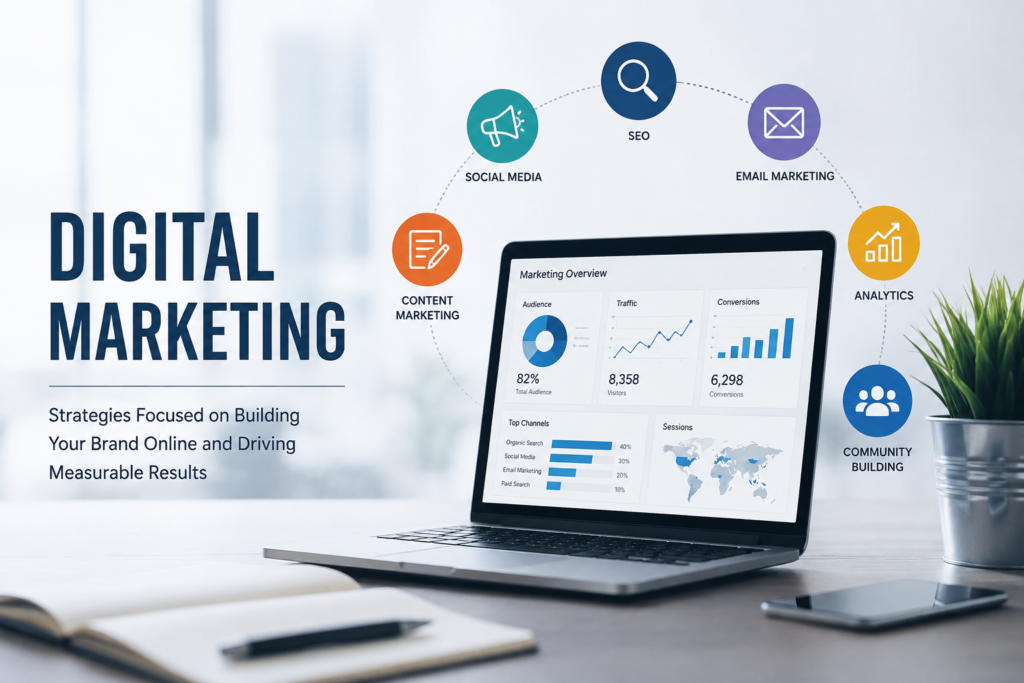
Digital marketing has become one of the most important parts of modern business. As consumers increasingly use search engines, social media, websites, mobile applications, and online marketplaces, businesses need effective digital strategies to reach and engage their target audiences.
For students and beginners, digital marketing offers a broad field with opportunities in both employment and entrepreneurship. Its scope extends far beyond posting on social media—it includes search engines, content, advertising, data analysis, email, branding, e-commerce, and emerging technologies.
What Is Digital Marketing?
Digital marketing refers to the promotion of products, services, or brands through digital channels. These channels include search engines, websites, social media platforms, email, mobile applications, online advertising networks, and other internet-based platforms.
Unlike traditional marketing, digital marketing allows businesses to communicate with specific audiences and measure the results of their campaigns. For example, a company can determine how many people viewed an advertisement, clicked on it, visited its website, or completed a purchase.
This combination of reach, targeting, measurement, and flexibility is one of the main reasons why digital marketing has become essential for modern businesses.
Major Areas of Digital Marketing
The scope of digital marketing includes several specialized areas. Understanding these areas can help beginners decide which skills they want to develop.
1. Search Engine Optimization (SEO)
SEO focuses on improving a website’s visibility in search engine results. Businesses use SEO to attract people who are actively searching for information, products, or services.
SEO includes keyword research, content optimization, technical improvements, link building, and user-experience considerations. Because search engines continually evolve, SEO professionals need to keep learning and adapting.
2. Social Media Marketing
Social media marketing involves promoting brands and building relationships with audiences through platforms such as Instagram, Facebook, LinkedIn, YouTube, TikTok, and others.
It includes content creation, community management, paid advertising, influencer collaborations, and performance analysis. For beginners, social media marketing can be an accessible entry point because it combines creativity with marketing strategy.
3. Content Marketing
Content marketing focuses on creating useful and relevant material to attract and retain an audience. Examples include blog posts, videos, podcasts, infographics, newsletters, and educational guides.
The goal is not simply to produce large amounts of content but to provide information that solves problems and supports the customer’s journey. Strong writing, research, storytelling, and communication skills are particularly valuable in this area.
4. Pay-Per-Click and Online Advertising
Paid digital advertising allows businesses to reach specific audiences through search engines, social media, websites, and other digital platforms.
Unlike traditional advertising, digital campaigns can often be targeted according to factors such as location, interests, behavior, demographics, and search intent. Marketers can also measure results and adjust campaigns based on performance.
This area creates opportunities for professionals who enjoy working with numbers, experimentation, and business objectives.
5. Email Marketing
Email marketing remains an important channel for businesses because it provides a direct way to communicate with customers and potential customers.
Marketers use email for newsletters, product announcements, promotions, customer education, and automated communication. Successful email marketing requires understanding audience segmentation, personalization, copywriting, and performance measurement.
6. Web Analytics and Data-Driven Marketing
Modern marketing increasingly depends on data. Web analytics helps marketers understand how people interact with websites and campaigns.
Professionals can analyze metrics such as traffic, engagement, conversion rates, customer acquisition costs, and return on advertising spend. As businesses become more data-driven, analytical skills are likely to remain highly valuable.
Career Opportunities in Digital Marketing
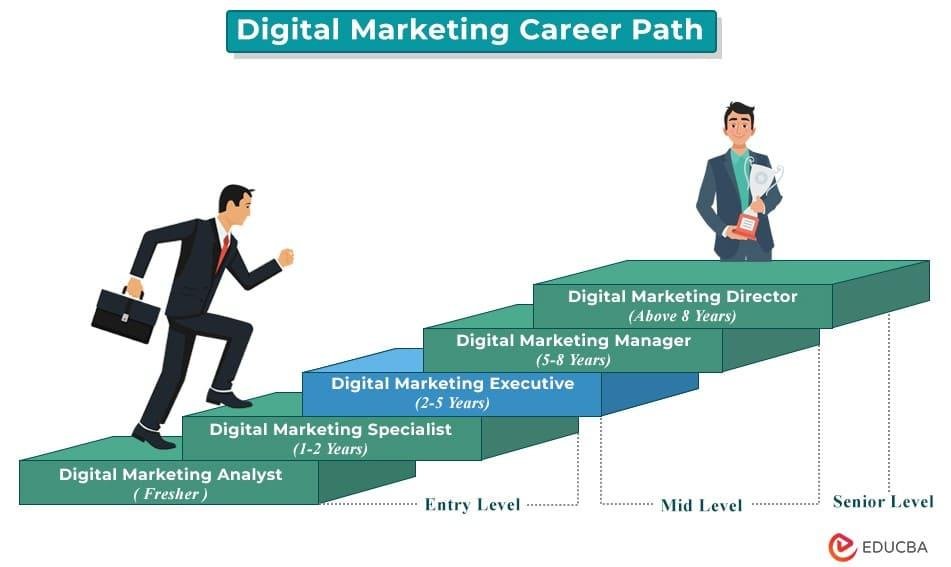
The broad scope of digital marketing creates a variety of career paths. Beginners can specialize in areas such as:
- SEO Specialist
- Social Media Manager
- Content Writer or Content Strategist
- Digital Advertising Specialist
- Email Marketing Specialist
- Digital Marketing Executive
- Marketing Analyst
- E-commerce Marketing Specialist
- Influencer Marketing Specialist
- Digital Marketing Consultant
A person does not necessarily need to master every area. A better approach for beginners is to understand the fundamentals of digital marketing and then develop deeper expertise in one or two areas.
Scope of Digital Marketing for Businesses
Digital marketing is valuable not only for large corporations but also for startups, small businesses, educational institutions, non-profit organizations, and individual professionals.
A small business can use digital channels to reach customers beyond its immediate geographical area. An online store can advertise products to specific customer segments. A professional can use content and social media to build a personal brand.
This accessibility has reduced some of the traditional barriers to entering a market. However, increased accessibility also means greater competition. Businesses must therefore focus on providing genuine value, understanding their audiences, and measuring their results.
The Future of Digital Marketing
The future of digital marketing is closely connected with developments in artificial intelligence, automation, personalization, video content, voice technologies, and data analytics.
Artificial intelligence can help marketers analyze large amounts of information, generate ideas, automate repetitive tasks, and personalize customer experiences. However, technology does not eliminate the need for human judgment. Creativity, strategic thinking, communication, ethical decision-making, and an understanding of consumer behavior will continue to matter.
Another important development is the increasing importance of privacy and responsible use of customer data. Future marketers will need to balance personalization and business objectives with transparency and consumer trust.
Skills Students Should Develop
Students who want to build a career in digital marketing should develop a combination of technical, analytical, and creative skills.
Important skills include:
- Communication: The ability to explain ideas clearly.
- Writing: Useful for blogs, advertisements, emails, websites, and social media.
- SEO knowledge: Understanding how search visibility works.
- Data analysis: Ability to interpret marketing metrics and identify trends.
- Social media skills: Understanding content formats, audiences, and engagement.
- Basic design and video skills: Increasingly useful for digital content creation.
- Strategic thinking: Connecting marketing activities with business objectives.
- Adaptability: Digital platforms and technologies change rapidly.
Students can also gain practical experience by creating a small website, managing a social media page, writing a blog, analyzing a sample advertising campaign, or developing a personal portfolio.
Conclusion
The scope of digital marketing is broad and continues to expand as businesses and consumers become more dependent on digital platforms. From SEO and social media to paid advertising, content creation, analytics, and emerging AI technologies, the field offers numerous opportunities for students and beginners.
However, success in digital marketing requires more than learning individual tools. Professionals need to understand customers, analyze data, communicate effectively, think strategically, and continuously update their knowledge.
For students considering a career in marketing, digital marketing can therefore be a practical and dynamic field with opportunities across industries. Building strong fundamentals, gaining hands-on experience, and developing a specialized skill set can provide a solid foundation for entering this growing profession.